
India Is Short on Copper. Jaipur Should Be Where It's Solved.
Why the country's next major metals trading hub has more to do with Jaipur's trading DNA than its geology — and what San Bal Ispat is building because of it.
There's a number that should worry anyone building India's electrical grid, EV supply chain, or data centre pipeline: 90 to 95%. That's roughly how much of the copper concentrate India needs, it currently has to import. Not a shortfall at the margins — a structural dependency at the core of a metal that touches almost everything the country is trying to build in the next decade.
This isn't a hypothetical supply risk. It's already showing up in the numbers.
The state of copper in India, in five facts
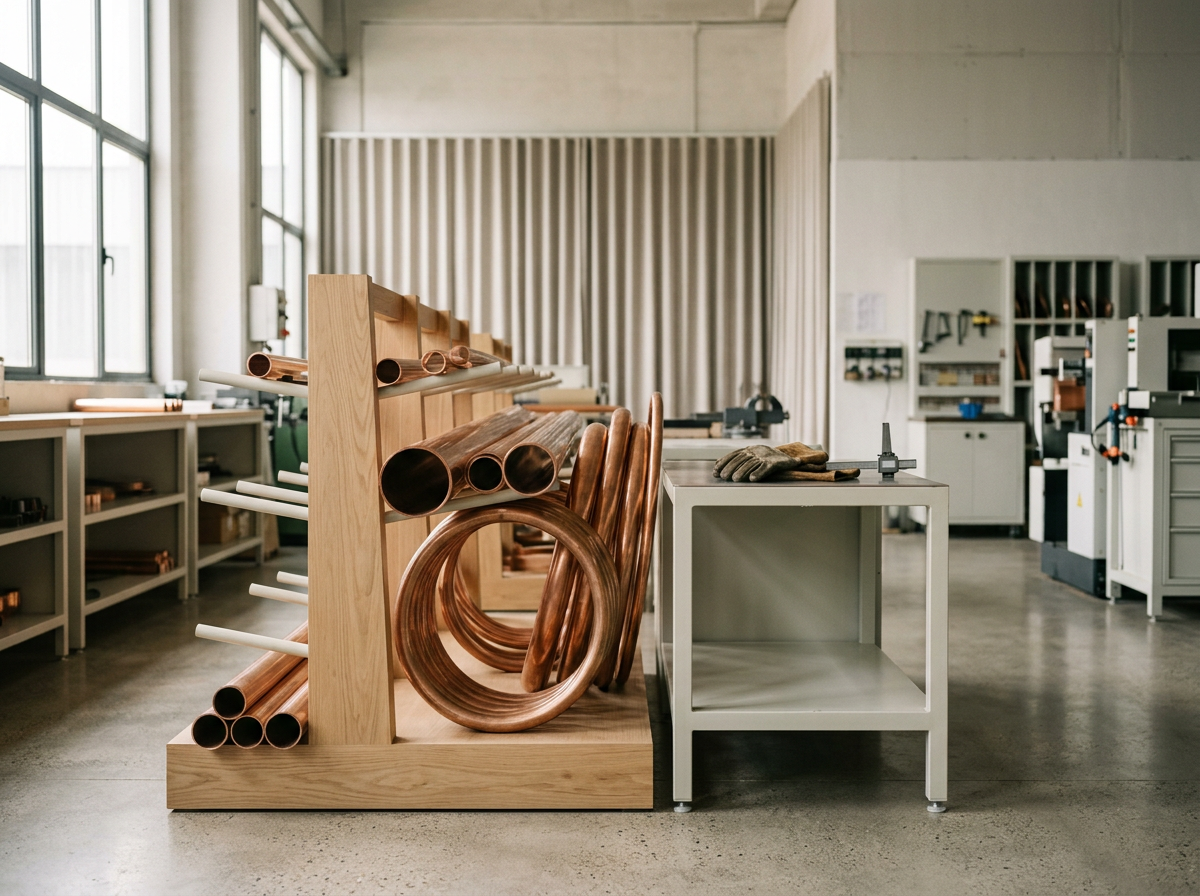
1. Demand is growing faster than the country can supply it. India consumed close to 1.9 million tonnes of copper in FY25, up 9.3% from the year before, according to data from the International Copper Association India. That growth rate isn't a blip — it's being pulled by EV manufacturing, solar and wind capacity additions, data centre buildouts, and railway electrification, all of which are copper-intensive by design. Industry projections put India's copper demand at over 3 million tonnes by FY2030 — nearly double what it consumes today.
2. Domestic production is shrinking, not growing. India's own copper output fell to roughly 573,000 tonnes in FY25, down from 843,000 tonnes in FY18. The single biggest reason: the 2018 closure of Sterlite Copper's Tuticorin smelter, which alone cut the country's cathode output by close to 40%. Since then, India has gone from being a net exporter of copper to a significant net importer — a reversal that happened inside a decade.
3. The import bill is real money, and it's rising. India imported more than 520,000 tonnes of refined copper in FY25 alone, worth in excess of $10 billion. That's before accounting for copper concentrate imports, which make up the bulk of what domestic smelters need just to keep operating.
4. The government has already flagged this as a strategic risk. In 2023, copper was added to India's official list of Critical Minerals by the Ministry of Mines — a formal acknowledgment that supply security for this metal matters to national economic and energy goals, not just to industrial buyers. Industry estimates suggest India needs roughly 500,000 tonnes of new refining and smelting capacity added every five years just to keep pace with demand.
5. Recycled copper is the fastest, cleanest way to close part of that gap. Secondary copper — recovered from scrap rather than mined ore — takes roughly 85% less energy to produce than primary copper, and meets the same industrial specifications for most downstream applications. As sustainability commitments tighten across manufacturing and export markets, recycled copper isn't a stopgap. It's becoming the preferred input.
Put those five facts together and the picture is clear: India has a copper deficit that mining alone won't fix in time, an increasingly urgent need for organized secondary supply, and a growing base of buyers — mills, refineries, cable manufacturers, EV component makers — who need that supply to be graded, documented, and dependable.
Why Jaipur, specifically
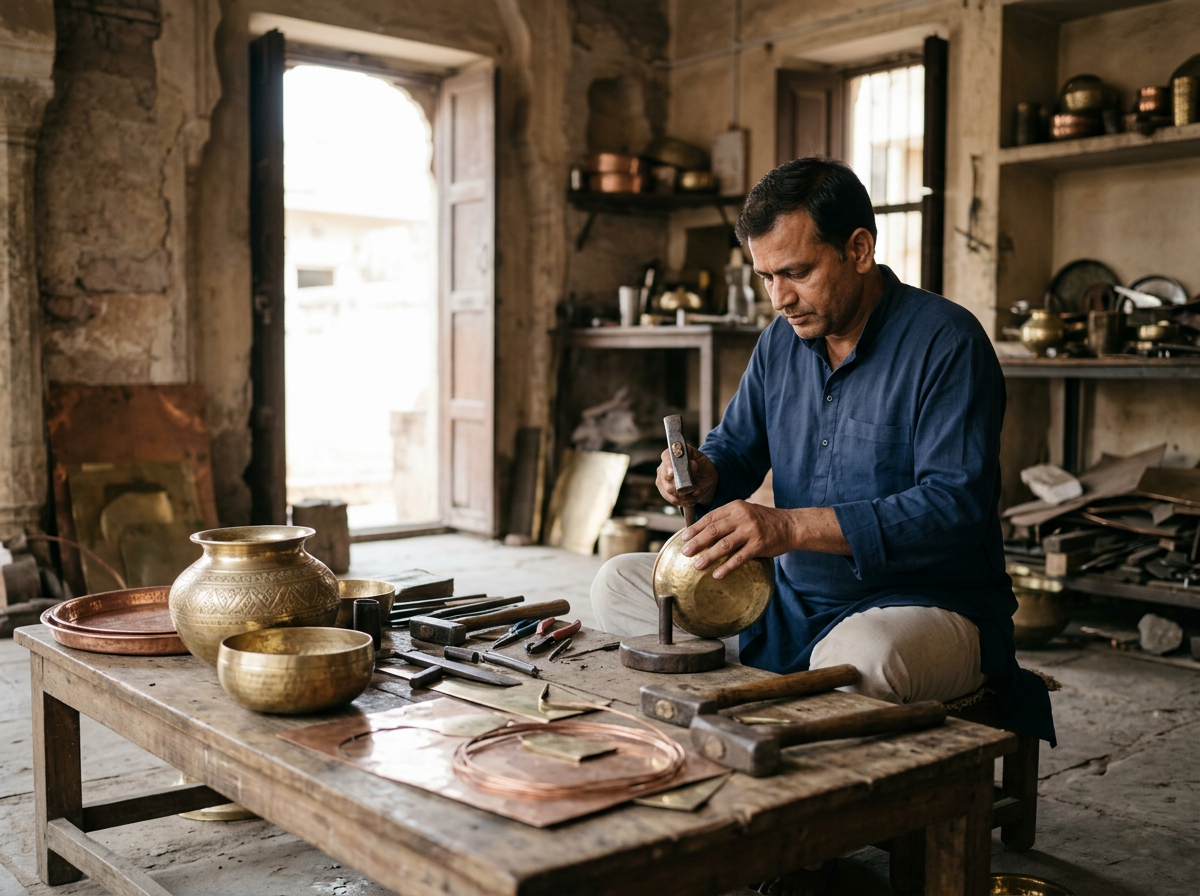
Here's where most conversations about India's copper future default to Mumbai or Gujarat's ports. But there's a case for Jaipur that isn't about sentiment — it's about geology and precedent.
Rajasthan is India's second-largest copper-producing state, after Madhya Pradesh. And roughly 80 kilometres from Jaipur sits the Khetri Copper Belt — a metallogenic province in the Jhunjhunu district that has been mined for copper since antiquity, and which today hosts Hindustan Copper Limited's Khetri Copper Complex, incorporating a mine, concentrator, smelter, and electrolytic refinery. This isn't a region discovering copper. It's a region that has quite literally been trading in it for thousands of years, industrially organized around it since the 1960s.
What Jaipur adds on top of that geological proximity is something harder to build from scratch: a trading identity. The city built its global reputation on gems, textiles, and precious metals — on moving high-value commodities across borders, maintaining long-term buyer relationships, and being a destination serious buyers seek out rather than a stop along the way. Surat did this for diamonds. Mumbai did it for finance. The infrastructure of trust, documentation discipline, and buyer networks that took those cities decades to build already exists in Jaipur — just applied to different commodities, for now.
Copper is the natural next chapter. The raw material is in the region. The trading culture is in the city. What's been missing is an organized, standards-driven player willing to connect the two.
What San Bal Ispat is building
That's the specific gap San Bal Ispat exists to close.
We supply copper in millberry, cathode, and ingot and more grades, verified against ISRI's BERRY/BARLEY classification and benchmarked to LME standards — 99.9% minimum Cu purity, wire thickness above 1.6mm with zero hair wire, bright and unoxidized material with zero insulation or tin contamination. Alongside copper, our portfolio covers HMS 1 & 2, MS scrap, brass, aluminium, and zinc — because most of our buyers, from foundries to industrial manufacturers, need more than one metal graded to the same standard of reliability.
Every lot moves through the same five-step process: collection from established channels (construction and demolition material, end-of-life vehicles, industrial equipment, cables, and electronics), sorting by quality before anything moves forward, inspection and grading against purity and contamination benchmarks, clean documentation and transparent pricing, and on-time delivery exactly as graded. No step is optional, and no shortcuts are taken at inspection — because in this industry, reputation is the only thing that scales slower than volume.
That discipline isn't new to us. It's the same grading rigor, documentation standard, and supplier relationships built over 15 years running KG Ispat & Alloys, an authorized SAIL dealership operating out of Jaipur since 2009 — now applied to a metal with a far steeper demand curve and a far less organized secondary market in India.
The opportunity, plainly
India doesn't have a copper demand problem. It has a copper supply organization problem — mines that can't scale fast enough, smelting capacity that hasn't kept pace, and a secondary market that's still fragmented compared to what buyers actually need: consistent grade, verifiable documentation, and a trading partner who treats every shipment like the next one depends on it.
Jaipur has the geology, twenty kilometres from a copper belt that's been worked since before recorded trade routes existed, and the trading temperament of a city that's spent centuries turning valuable commodities into lasting relationships. San Bal Ispat is where those two things are being brought together — for mills, refineries, cable manufacturers, and industrial buyers across India and internationally who are looking to buy copper scrap in India from a supplier that treats grading as non-negotiable.
The deficit isn't closing on its own. Jaipur, and companies built for this moment, are how it starts to.
San Bal Ispat is a copper and metal scrap trading company headquartered in Jaipur, India, supplying ferrous and non-ferrous metals — including millberry, busbar, and copper wire scrap, HMS, MS scrap, brass, aluminium, and zinc — to mills, refineries, foundries, and industrial buyers across India and internationally.